

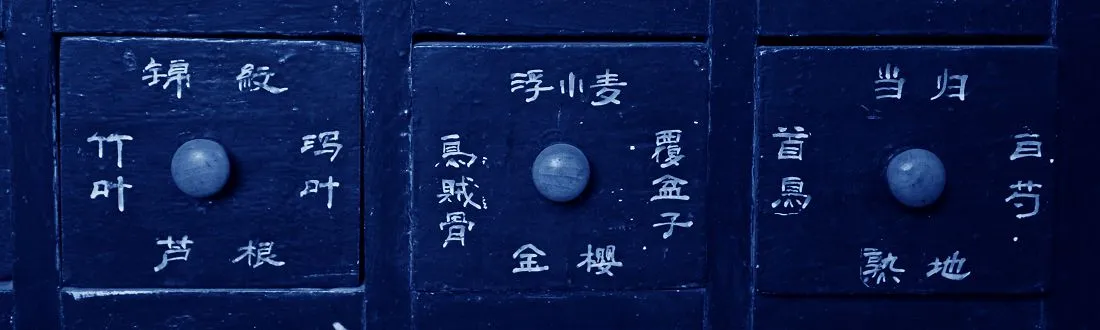
Gui Pi Tang (归脾汤) — Restore the Spleen Decoction
By Dr (TCM) Attilio D’Alberto — registered Traditional Chinese Medicine practitioner (BAcC, RCHM) with over 25 years’ clinical experience.
Quick answer: Gui Pi Tang is a classical Chinese herbal formula that tonifies Heart and Spleen Qi and Blood while calming the Shen. Gui Pi Tang is prescribed for insomnia[8] (especially difficulty falling asleep with an overactive worrying mind), anxiety[4], palpitations, poor memory, fatigue[9], burnout, irregular or scanty periods, and depression[1] with prominent exhaustion — the pattern called Heart and Spleen deficiency in TCM.
On this page
What is Gui Pi Tang?
Gui Pi Tang — literally "Restore the Spleen Decoction" — is a classical Song-dynasty Chinese herbal formula (1253 CE) that tonifies Qi and Blood simultaneously while calming the Heart-Mind.
Gui Pi Tang — Restore the Spleen Decoction — is one of the most clinically versatile and widely used formulas in the entire Chinese herbal medicine tradition. It tonifies Qi and Blood simultaneously while also calming the Heart-Mind, making it uniquely suited to the extremely common modern pattern of mental-emotional and physical exhaustion from overwork, worry and insufficient rest. First recorded in the Song Dynasty (1253 CE), it addresses both the root cause (Spleen Qi failing to produce sufficient Blood) and the manifestation (Heart insufficiently nourished, leading to insomnia, anxiety and palpitations).
What TCM pattern does Gui Pi Tang treat?
Gui Pi Tang treats Heart and Spleen Qi and Blood deficiency — the pattern that combines mental-emotional exhaustion (worry, poor sleep, palpitations) with physical exhaustion (fatigue, poor appetite, scanty periods, pale complexion).
Gui Pi Tang is prescribed for Heart and Spleen Qi and Blood deficiency, characterised by: insomnia (particularly difficulty falling asleep with excessive worry), palpitations, poor memory and difficulty concentrating, anxiety, fatigue, poor appetite, a pale complexion, scanty or irregular menstruation, a pale tongue with thin white coating, and a thin, weak pulse.
What herbs are in Gui Pi Tang?
Gui Pi Tang contains 10 herbs: Ren Shen, Huang Qi, Bai Zhu, Fu Ling, Dang Gui, Long Yan Rou, Suan Zao Ren, Yuan Zhi, Mu Xiang and Zhi Gan Cao — combining Qi tonics, Blood tonics and Shen-calming herbs with one Qi-mover (Mu Xiang) to prevent stagnation.
- Ren Shen (Panax ginseng root, 3-15g) — tonifies Yuan Qi and Spleen Qi
- Huang Qi (Astragalus membranaceus root, 2-30g) — powerfully tonifies Spleen Qi; works with Ren Shen to rebuild the root
- Bai Zhu (Atractylodes macrocephala rhizome, 3-30g) — tonifies Spleen Qi and dries Dampness
- Fu Ling (Poria cocos, 3-30g) — tonifies Spleen, resolves Dampness and calms the Heart-Mind
- Dang Gui (Angelica sinensis root, 2-30g) — nourishes Blood and the Heart
- Long Yan Rou (Dimocarpus longan fruit flesh, 3-30g) — nourishes Heart Blood and calms the Shen
- Suan Zao Ren (Ziziphus spinosa seed, 3-30g) — nourishes Heart Blood and calms the Shen; the most important single herb in TCM for insomnia
- Yuan Zhi (Polygala tenuifolia root, 1-30g) — calms the Shen and promotes the communication between Heart and Kidney
- Mu Xiang (Saussurea lappa root, 1-15g) — moves Qi and prevents the tonifying herbs from causing stagnation
- Zhi Gan Cao (honey-fried Glycyrrhiza root, 1-7.5g) — tonifies Qi and harmonises the formula
What does Gui Pi Tang do?
Gui Pi Tang has three core actions: it tonifies Heart and Spleen Qi, nourishes Blood, and calms the Shen (spirit).
- Tonifies and nourishes Heart and Spleen
- Nourishes Blood
- Calms the spirit
What conditions does Gui Pi Tang treat?
Gui Pi Tang is used to treat insomnia, anxiety, palpitations, burnout, chronic fatigue, depression with prominent exhaustion, irregular or scanty periods, and poor memory — whenever the underlying pattern is Heart and Spleen deficiency.
- Insomnia — particularly difficulty falling asleep with an overactive, worrying mind
- Anxiety and palpitations from Heart Blood deficiency
- Burnout and chronic fatigue from overwork, worry and inadequate recovery
- Depression with prominent fatigue, poor appetite and palpitations
- Irregular menstrual cycle and scanty periods from Spleen Qi failing to hold Blood
- Poor memory and cognitive difficulties from insufficient Blood nourishing the Heart-Mind
Are there any cautions with Gui Pi Tang?
Gui Pi Tang is contraindicated in patterns of Damp-Phlegm, Damp-Heat or strong Liver Qi stagnation without underlying deficiency — it is a tonifying formula, so excess patterns must be cleared first.
Always consult a qualified Chinese herbalist registered with the Register of Chinese Herbal Medicine (RCHM). Online herbal consultations are available. See the prices page for costs.
Prefer to be treated from home? Chinese herbal medicine online consultations are available throughout the UK and worldwide. After a full video consultation, Dr (TCM) Attilio D'Alberto formulates a bespoke herbal prescription and posts your Chinese herbs directly to your door.
References
[1] Butler L, Pilkington K. Chinese herbal medicine and depression: the research evidence. Evid Based Complement Alternat Med. 2013;2013:739716. https://doi.org/10.1155/2013/739716. PMID: 23476690.
[4] Lin Y, Cai S, Wang T, Zhuang T, Huang T, Yu X, et al. Evaluation of the Safety and Efficacy of Xiao Yao San as a Treatment for Anxiety: A Systematic Review and Meta-Analysis. Evid Based Complement Alternat Med. 2022;2022:1319592. https://doi.org/10.1155/2022/1319592. PMID: 35432568.
[8] Hu J, Teng J, Wang W, Yang N, Tian H, Zhang W, Peng X, Zhang J. Clinical efficacy and safety of traditional Chinese medicine Xiao Yao San in insomnia combined with anxiety. Medicine (Baltimore). 2021 Oct 29;100(43):e27608. https://doi.org/10.1097/MD.0000000000027608. PMID: 34713840.
[9] Wang YY, Li XX, Liu JP, Luo H, Ma LX, Alraek T. Traditional Chinese medicine for chronic fatigue syndrome: a systematic review of randomized clinical trials. Complement Ther Med. 2014 Aug;22(4):826-33. https://doi.org/10.1016/j.ctim.2014.06.004. PMID: 25146086.
What is Gui Pi Tang used for?
Gui Pi Tang (Restore the Spleen Decoction) is the principal Chinese herbal formula for Heart-and-Spleen deficiency — the pattern of mental exhaustion, worry-driven insomnia, palpitations, fatigue, poor appetite and a tendency to bruise easily. It's particularly useful in stressed professional patients with chronic insomnia driven by overthinking, in post-natal women with depletion-and-anxiety, and in patients with fatigue and mild cognitive complaints from chronic overwork.
How long does Gui Pi Tang take to improve insomnia?
Most patients with Heart-Spleen-deficient insomnia notice improvement in sleep onset and quality within 2–3 weeks. Substantial sleep architecture improvement (deeper, less fragmented sleep, fewer awakenings) develops over 6–12 weeks. The formula works by rebuilding Blood and calming Shen rather than by sedation, so the improvement is durable and doesn't produce daytime drowsiness.
Can Gui Pi Tang help anxiety and depression?
Yes — Gui Pi Tang is one of the most frequently prescribed formulas for the Heart-Spleen deficient presentation of anxiety and mild-to-moderate depression. The picture combines low mood, mental fatigue, poor concentration, palpitations and disturbed sleep. The formula combines Qi-and-Blood tonification (Bai Zhu, Huang Qi, Dang Gui) with Shen-calming herbs (Yuan Zhi, Suan Zao Ren) for sustained improvement.
What is the difference between Gui Pi Tang and Suan Zao Ren Tang for insomnia?
Suan Zao Ren Tang targets Liver-Blood deficiency with prominent heat features (night sweats, vivid dreams, restlessness, dry mouth at night). Gui Pi Tang targets Heart-and-Spleen deficiency with prominent mental fatigue, worry, palpitations and poor appetite. Both formulas can be combined when both patterns are present. Selection depends on pattern differentiation by a qualified herbalist.
Is Gui Pi Tang safe during pregnancy?
Yes — Gui Pi Tang is considered safe in pregnancy and is sometimes used for pregnancy-related insomnia and anxiety on the Heart-Spleen-deficient pattern. The formula contains no contraindicated pregnancy herbs. However, herbal use in pregnancy always requires individual assessment by a qualified Chinese herbalist with pregnancy experience.















