

Chai Hu Shu Gan San / Wan (柴胡疏肝散) — Bupleurum Liver-Spreading Powder
On this page
- Overview
- Chai Hu Shu Gan San vs Wan
- TCM pattern
- Key herbs
- Formula actions
- Conditions treated
- How does Chai Hu Shu Gan San work?
- Dosage and forms
- Cautions and contraindications
- Online Chinese herbal consultations
- Frequently asked questions
- References
Overview
Chai Hu Shu Gan San (also commonly written as Chai Hu Shu Gan Wan in patent-pill form) — Bupleurum Liver-Spreading Powder — is the primary classical Chinese herbal formula for spreading Liver Qi and relieving pain and tension from Liver Qi stagnation with channel obstruction. The formula was developed from the classical Shang Han Lun formula Si Ni San by adding additional Qi-moving (Xiang Fu, Chen Pi, Zhi Ke) and pain-relieving (Chuan Xiong) herbs. In modern clinical practice, where chronic stress, overwork and emotional constraint make Liver Qi stagnation one of the most common TCM patterns seen, Chai Hu Shu Gan San is among the most frequently prescribed formulas of the entire Chinese Materia Medica.
Chai Hu Shu Gan San vs Chai Hu Shu Gan Wan
The same formula appears under two slightly different names depending on its delivery form:
- Chai Hu Shu Gan San — the original classical name. “San” (散) means powder — the herbs are ground together and decocted, or in modern practice supplied as pharmaceutical-grade granules. This is the most potent and individualisable form.
- Chai Hu Shu Gan Wan — “Wan” (丸) means pill. The Chai Hu Shu Gan Wan patent-pill formulation contains the same eight herbs in a honey-bound pill form, typically 8–12 pills three times daily. Convenient but lower potency than granules.
Throughout this page Chai Hu Shu Gan San and Chai Hu Shu Gan Wan refer to the same classical formula in different delivery forms; the composition is identical. Most practitioners use the granule (San) form to allow modifications based on the patient’s specific TCM pattern.
TCM pattern
Chai Hu Shu Gan San is prescribed for Liver Qi stagnation with obstruction of the channels, characterised by: pain and distension in the hypochondriac region (under the ribs), emotional tension, irritability, frustration, sighing, chest tightness, and a wiry (Xian) pulse. Unlike Xiao Yao San, Chai Hu Shu Gan San is more vigorously Qi-moving and is used where pain and physical obstruction are the more prominent features. The tongue is typically pale or slightly red with a thin white coating; the pulse is wiry, particularly in the left Guan (middle) position which reflects Liver function in TCM pulse diagnosis.
Key herbs
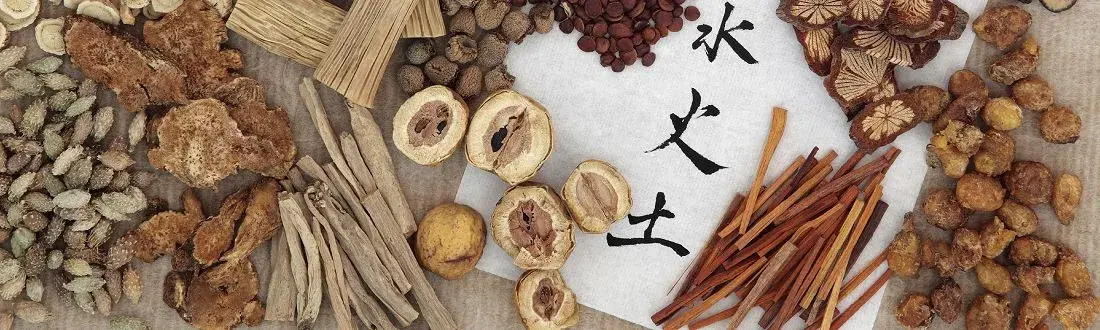
- Chai Hu (Bupleurum chinense root, 6g) — the principal herb; spreads Liver Qi and releases constraint
- Chen Pi (Citrus reticulata peel) — regulates Qi and moves stagnation in the Middle Jiao
- Chuan Xiong (Ligusticum chuanxiong rhizome) — invigorates Blood and moves Qi; excellent for pain from Qi and Blood stagnation
- Xiang Fu (Cyperus rotundus rhizome) — the most important herb for spreading Liver Qi; regulates menstruation and alleviates pain
- Zhi Ke (Citrus aurantium fruit) — moves Qi downward and reduces distension
- Bai Shao (Paeonia lactiflora root, 9g) — nourishes Blood, softens the Liver and alleviates spasmodic pain
- Zhi Gan Cao (honey-fried Glycyrrhiza root) — harmonises and moderates pain
Formula actions
- Spreads Liver Qi and relieves constraint
- Invigorates Blood
- Alleviates pain
Conditions treated
- Stress and depression[1] where Liver Qi stagnation produces physical tension alongside low mood
- IBS[5] with abdominal cramping triggered or worsened by emotional stress
- Hypochondriac pain and tightness — the formula’s primary classical indication
- Irregular menstrual cycle and premenstrual pain from Liver Qi stagnation
- Headaches and migraines from Liver Qi stagnation in the Gallbladder channels
How does Chai Hu Shu Gan San work?
The eight herbs of Chai Hu Shu Gan San work synergistically across three mechanism layers:
- Liver Qi spreading — Chai Hu and Xiang Fu, the two principal Liver-spreading herbs, work upward and inward respectively. Chai Hu lifts and spreads Liver Qi to release constraint while Xiang Fu, working in the lower Jiao and along the Liver-Gallbladder channels, regulates menstruation and alleviates abdominal-region Liver Qi pain
- Qi-and-Blood circulation — Chuan Xiong invigorates Blood movement throughout the body, particularly addressing the “pain from Qi stagnation transforming into Blood stasis” pattern that develops in chronic Liver Qi stagnation. Bai Shao nourishes Liver Blood, softens the Liver and prevents the Qi-moving herbs from depleting Blood
- Middle Jiao Qi regulation — Chen Pi (regulating Qi in the middle Jiao) and Zhi Ke (descending Qi and reducing distension) prevent the upward-moving Liver Qi from disturbing the Stomach and digestive function, addressing the IBS, reflux and abdominal cramping that often accompanies Liver Qi stagnation in modern patients
Pharmacological research has documented anxiolytic, anti-depressant, antispasmodic and analgesic activities of the principal constituents. Saikosaponins from Chai Hu have HPA-axis-modulating effects; paeoniflorin from Bai Shao has documented GABAergic activity; the combined effect supports the formula’s traditional use in stress-related pain and emotional constraint.
Dosage and forms
Chai Hu Shu Gan San (and Chai Hu Shu Gan Wan) is available in several forms:
- Pharmaceutical-grade granules (Chai Hu Shu Gan San form) — 4–6 g/day in 2–3 divided doses, dissolved in warm water. Typical course 6–12 weeks for stress and pain; longer for chronic IBS or menstrual disorders. The most potent and individualised form.
- Patent pills (Chai Hu Shu Gan Wan form) — 8–12 small honey-bound pills three times daily. Convenient but lower potency than granules. Best for mild stress-pattern presentations.
- Decoction (traditional) — rarely used in modern UK practice.
I prescribe pharmaceutical-grade granules from Sun Ten in Taiwan, always within an individualised prescription. Sun Ten granules are tested to international quality and safety standards.
Cautions and contraindications
- Yin and Blood deficiency without stagnation — the formula is Qi-moving and warming; in marked Yin or Blood deficiency it can further deplete substrate
- Pregnancy — not routinely used; can be considered under specialist supervision for specific stress-pattern indications
- Active liver disease — some constituent herbs require monitoring of liver enzymes in patients with hepatitis or other active liver pathology
- Long-term high-dose Zhi Gan Cao exposure — can theoretically contribute to pseudo-aldosteronism; monitor blood pressure and serum potassium with continuous use beyond 3 months
- Heavy bleeding — the Chuan Xiong component is Blood-moving and may worsen bleeding patterns
Always consult a qualified Chinese herbalist registered with the Register of Chinese Herbal Medicine (RCHM). Never self-prescribe. Online herbal consultations are available. See the prices page for costs.
Online Chinese herbal consultations
I prescribe Chinese herbal medicine through online video consultations for patients throughout the UK and internationally. After a full case-history consultation reviewing your TCM pattern, presenting complaint, current medications and individual constitution, a bespoke prescription is formulated and the pharmaceutical-grade granules from Sun Ten in Taiwan are posted directly to your door. I am a member of the British Acupuncture Council (BAcC) and the Register of Chinese Herbal Medicine (RCHM) with over 25 years of clinical experience.
Treatment runs alongside (not instead of) conventional medical care. Always continue to be seen by your GP or specialist for any diagnosed condition; herbal medicine is used as a complementary therapy. See the prices page for consultation and dispensing fees.
Frequently asked questions about Chai Hu Shu Gan San
What is the difference between Chai Hu Shu Gan San and Xiao Yao San?
Xiao Yao San is for Liver Qi stagnation with Spleen Qi deficiency and Liver Blood deficiency — the “tired-and-stressed” pattern with mood, mild PMS, breast tenderness, fatigue and digestive weakness. Chai Hu Shu Gan San is more vigorously Qi-moving and is used where pain and physical obstruction are more prominent: hypochondriac pain, stronger stress-induced IBS, tension headaches, premenstrual pain rather than just mood. Both can be combined when the pattern has both deficient and stagnant features.
How quickly does Chai Hu Shu Gan San work for hypochondriac pain?
Most patients with stress-pattern hypochondriac pain or rib-side tightness notice improvement within 2–3 weeks of daily granule treatment. Premenstrual pain typically responds over 2–3 menstrual cycles. IBS with stress triggers responds over 4–6 weeks. The Qi-moving action is felt first as reduced tension and easier deep breathing, with the deeper Blood-moving and Liver-softening effects developing over the subsequent weeks.
Can Chai Hu Shu Gan San help with stress-induced IBS?
Yes — stress-induced IBS with abdominal cramping that worsens with emotional stress is one of the classic indications. The formula targets the “Liver invading the Spleen” pattern in TCM, where stuck Liver Qi disrupts the Spleen’s ability to transform food and transport fluids. For IBS-D (diarrhoea-predominant) the formula is often combined with Tong Xie Yao Fang; for IBS-C (constipation-predominant) with stronger Qi-moving and downward-draining herbs.
Can I take Chai Hu Shu Gan San with antidepressants?
Chinese herbal formulas in the Liver-spreading family (including Chai Hu Shu Gan San and the Xiao Yao family) are widely used in TCM clinical practice alongside prescribed SSRIs and SNRIs. Clinical trials have studied related Chai Hu-containing formulas combined with antidepressants and reported additive benefit on depression rating scales. No clinically significant pharmacokinetic interactions have been reported. Never reduce or stop a prescribed antidepressant without your doctor’s involvement.
Does Chai Hu Shu Gan San help PMS and menstrual pain?
Yes — PMS with marked physical tension, breast tenderness, premenstrual pain and irritability responds well to Chai Hu Shu Gan San. Xiang Fu is the central herb in TCM for regulating menstruation through the Liver channel, and the combination with Chai Hu addresses the Liver Qi stagnation that drives many PMS patterns. Treatment is typically taken throughout the cycle for 2–3 menstrual cycles to assess response. For PMS with hot-flush or irritability-with-heat features, Jia Wei Xiao Yao Wan may be more appropriate.
Can Chai Hu Shu Gan San be taken long-term?
Yes, in many patients with chronic Liver Qi stagnation the formula can be taken daily for 3–6 months without typical accumulation issues. For continuous use beyond 6 months I usually move to a maintenance pattern (formula 5 days per week with weekends off, or alternating with a slightly different Liver-spreading formula) to maintain the responsiveness. Monitor blood pressure and serum potassium with continuous Zhi Gan Cao exposure beyond 3 months.
Prefer to be treated from home? Chinese herbal medicine online consultations are available throughout the UK and worldwide. After a full video consultation, Dr (TCM) Attilio D'Alberto formulates a bespoke herbal prescription and posts your Chinese herbs directly to your door.
References
[1] Butler L, Pilkington K. Chinese herbal medicine and depression: the research evidence. Evid Based Complement Alternat Med. 2013;2013:739716. https://doi.org/10.1155/2013/739716. PMID: 23476690.
[5] Liu Q, Shi Z, Zhang T, Jiang T, Luo X, Su X, Yang Y, Wei W. Efficacy and Safety of Chinese Herbal Medicine Xiao Yao San in Functional Gastrointestinal Disorders: A meta-Analysis and Trial Sequential Analysis of Randomized Controlled Trials. Front Pharmacol. 2022 Jan 19;12:821802. https://doi.org/10.3389/fphar.2021.821802. PMID: 35126152.















